
You pull up to the pump and watch the total climb. Or you stare at an EV range estimate that drops the moment the temperature falls. Plenty of drivers feel stuck between old-school gas engines that waste fuel and pure electrics that still demand careful planning. Hybrid powertrains sit in the middle and quietly solve both problems for millions of people every day.
This is not marketing spin. It is the reason hybrid car technology keeps selling even as battery-electric options multiply. Understanding how hybrids work gives you a clearer picture of what actually fits your driving, your budget, and your patience for infrastructure.
What a Hybrid Powertrain Really Is
A hybrid powertrain combines a gasoline or diesel engine with one or more electric motors and a battery pack. The system decides moment by moment which power source, or combination of sources, delivers the best efficiency or performance. That decision happens faster than you can think about it.
The goal is simple. Recover energy that a conventional car throws away and use the electric motor where it is strongest—low-speed torque and stop-and-go traffic. The engine handles sustained high loads and long highway stretches where batteries still struggle without added weight and cost.
You never have to plug most hybrids in. The system manages its own battery through regenerative braking and the engine itself. That single fact removes the biggest daily friction many drivers feel with pure electric vehicles.
Core Components That Make the System Work
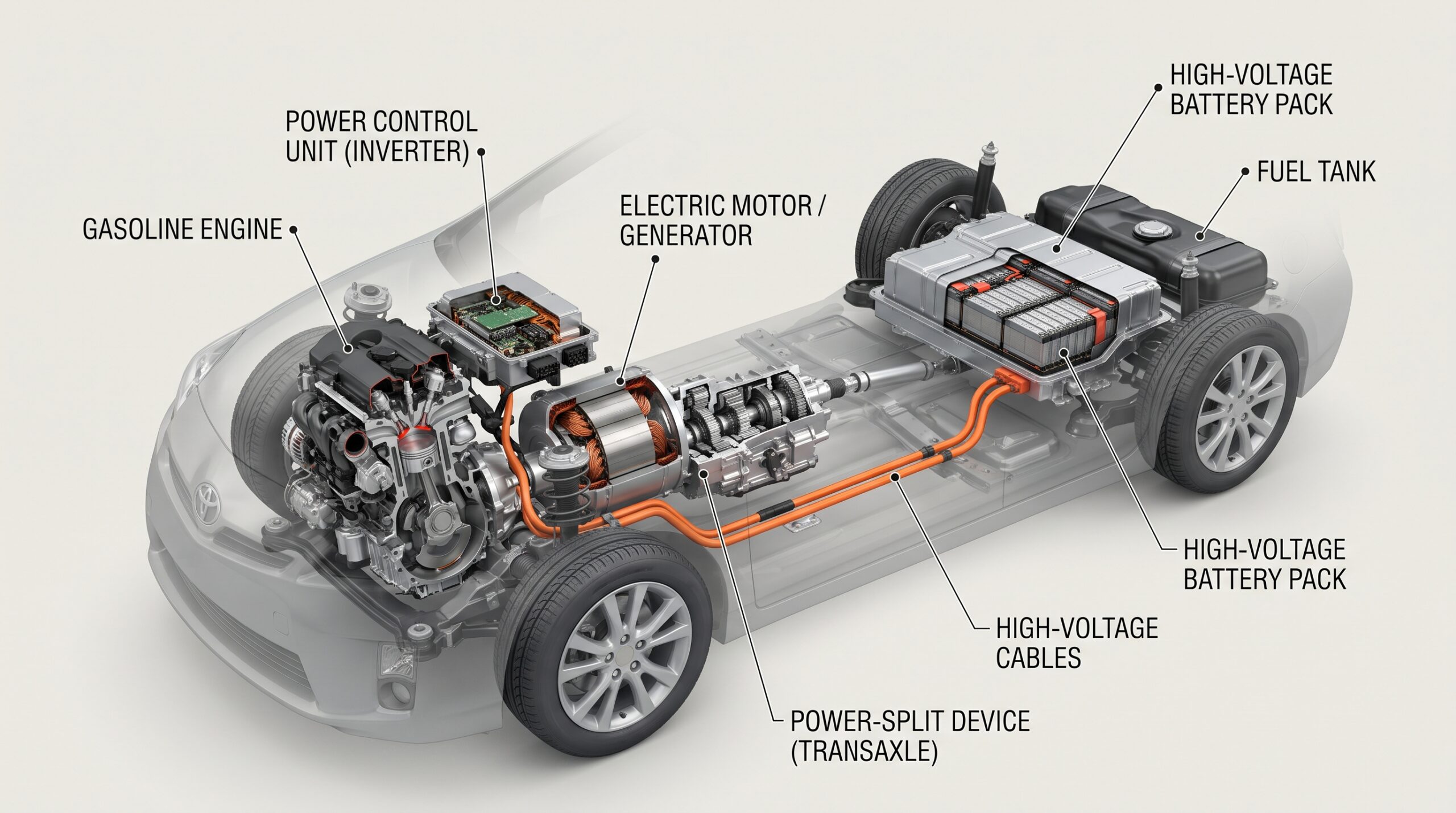
Every hybrid powertrain relies on a few key pieces working together. The internal combustion engine still provides the bulk of energy for longer trips. One or more electric motors supply instant torque and can propel the car alone at lower speeds. A high-voltage battery stores recovered energy and feeds the motors.
Power electronics manage the flow of electricity between battery, motors, and sometimes a generator. A sophisticated control unit constantly calculates the most efficient path. In many systems a planetary gearset or dedicated transmission blends the two power sources smoothly so you feel continuous acceleration rather than a hand-off.
Battery size varies widely. Traditional hybrids use relatively small packs focused on efficiency rather than pure electric range. Plug-in hybrids carry larger batteries that support longer electric-only driving before the engine joins in. The difference shows up in both price and how you use the vehicle.
The Main Types of Hybrid Systems
Not every hybrid works the same way. Parallel hybrids let both the engine and motor drive the wheels directly. The electric motor assists the engine or can sometimes move the car alone at low speeds. Many older and simpler systems use this layout.
Series hybrids reverse the relationship. The engine never drives the wheels. It only runs a generator that charges the battery or powers the electric motor. The wheels see only electric propulsion. This setup appears less often in passenger cars but shows up in some larger vehicles.
Series-parallel or power-split systems, made famous by Toyota, combine both approaches. A planetary gear device lets the engine and motors share duties in almost any ratio. The control software decides the split in real time. These systems deliver some of the best real-world fuel economy numbers on the market.
Mild hybrids add a small electric motor and battery that mainly assist the engine and enable smoother start-stop operation. They improve efficiency modestly without the ability to drive on electricity alone. Full hybrids and plug-in hybrids deliver bigger gains because they can shut the engine off completely for meaningful distances.
How Energy Recovery and Management Actually Happen
Regenerative braking is the feature most drivers notice first. When you lift off the accelerator or press the brake, the electric motor switches to generator mode. It slows the car while sending electricity back into the battery. Conventional friction brakes still handle hard stops, but everyday driving recovers energy that would otherwise become heat.
The control system also decides when to run the engine at its most efficient load point and when to shut it off. In traffic the engine often stays off while the motor creeps the car forward. On the highway the engine may run at a steady efficient speed while the motor fills in for acceleration or charges the battery.
Thermal management keeps the battery in its preferred temperature range. Cold weather reduces electric assist and regenerative strength until the pack warms up. Hot conditions trigger cooling. Modern systems handle these swings better than early hybrids, yet temperature still affects real-world results.
Real-World Fuel Efficiency and Ownership Reality
Hybrid powertrains shine in mixed and urban driving. The electric motor handles the least efficient part of the engine’s operating range—low-speed acceleration and idling. Highway numbers improve less dramatically because the engine already operates closer to its sweet spot.
Owners who previously drove conventional cars often see 30 to 50 percent better fuel economy in daily use, sometimes more in heavy traffic. Plug-in hybrids can post even higher figures if the driver charges regularly and keeps most trips within the electric range. Skip the charging and the vehicle behaves like a regular hybrid, still more efficient than a comparable non-hybrid.
Maintenance differs from both pure gas cars and pure electrics. Brake pads often last longer because regenerative braking does much of the work. The high-voltage battery is designed to outlast the rest of the vehicle under normal conditions, though capacity slowly declines over many years. Engine oil changes continue on a normal or slightly extended schedule. Transmission service depends on the specific design.
Hybrid Versus Pure Electric: The Practical Trade-Offs
Pure electric vehicles deliver stronger acceleration, lower energy costs per mile when charged at home, and zero tailpipe emissions. They also require access to reliable charging and acceptance of range limits that shift with weather, speed, and load. Long trips demand planning or acceptance of charging stops.
Hybrids remove that planning burden. You refuel in minutes anywhere gasoline is sold. The battery never leaves you stranded. Upfront cost usually sits between a comparable gas model and a pure EV. For drivers who lack home charging, take frequent long trips, or simply dislike range math, the hybrid powertrain remains the more practical fuel efficiency system.
Some drivers use a hybrid as a bridge. They gain efficiency and lower emissions now while waiting for battery prices, charging networks, and their own driving patterns to make a full electric transition smoother. Others plan to stay with hybrids for the foreseeable future because the technology already solves their daily needs.
Why Hybrid Car Technology Continues to Sell
Fuel prices still swing. Charging infrastructure expands unevenly. Battery minerals and manufacturing scale face real constraints. Against that background, a powertrain that cuts fuel use significantly without requiring new habits keeps winning buyers.
Manufacturers keep refining the systems. Better motors, smarter software, and more efficient engines appear each model year. Some new hybrids deliver electric-only feel around town while retaining long-range capability that pure electrics still price at a premium.
From a driver’s seat the experience feels refined. Smooth transitions, quiet low-speed running, and the quiet confidence that a long trip will not turn into a scavenger hunt for chargers. That combination explains the lasting popularity better than any single specification sheet.
If you are shopping, drive both a strong hybrid and a comparable pure electric on your actual routes. Pay attention to how often you would need to charge, how temperature affects the numbers, and whether the hybrid’s fuel savings justify its price premium over a conventional model. The right answer depends on your roads, your parking situation, and your tolerance for planning.
Test the technology against your real life rather than against marketing claims. The hybrid powertrain has stayed relevant for more than two decades because it solves ordinary problems without demanding extraordinary changes in how people drive.
FAQ
Do hybrid cars need to be plugged in?
Most traditional hybrids never need plugging in. The system recharges its battery through regenerative braking and the gasoline engine. Only plug-in hybrids are designed for regular external charging to maximize electric-only driving.
How long do hybrid batteries last?
Manufacturers typically warranty hybrid batteries for 8 to 10 years or 100,000 to 150,000 miles. Many packs continue working well beyond that period, though capacity gradually declines. Real-world longevity depends on climate, driving style, and maintenance of the cooling system.
Are hybrids more expensive to maintain than regular cars?
Routine maintenance is similar or sometimes lower because brake wear decreases. High-voltage components are designed for long life. When repairs are needed, specialized knowledge can raise labor costs, so choose a dealer or independent shop experienced with the specific system.
Is a hybrid better than a pure electric for long trips?
For most drivers the answer is yes. Hybrids refuel in minutes at any gas station and carry no meaningful range anxiety. Pure electrics require charging stops whose length and availability still vary widely by region and season.
Can I improve the fuel economy of my hybrid further?
Yes. Smooth acceleration, anticipatory braking that maximizes regeneration, proper tire pressure, and avoiding excessive idling with the climate system running all help. Some drivers also use eco modes or adjust climate settings to reduce electrical load.
The hybrid powertrain earned its place by delivering measurable efficiency without forcing drivers to reorganize their lives. That practical balance continues to matter. If your daily driving includes mixed conditions, occasional long trips, or limited charging access, this technology still deserves a serious look. Go drive one on your own roads and decide with real data instead of assumptions.
Leave a Reply