
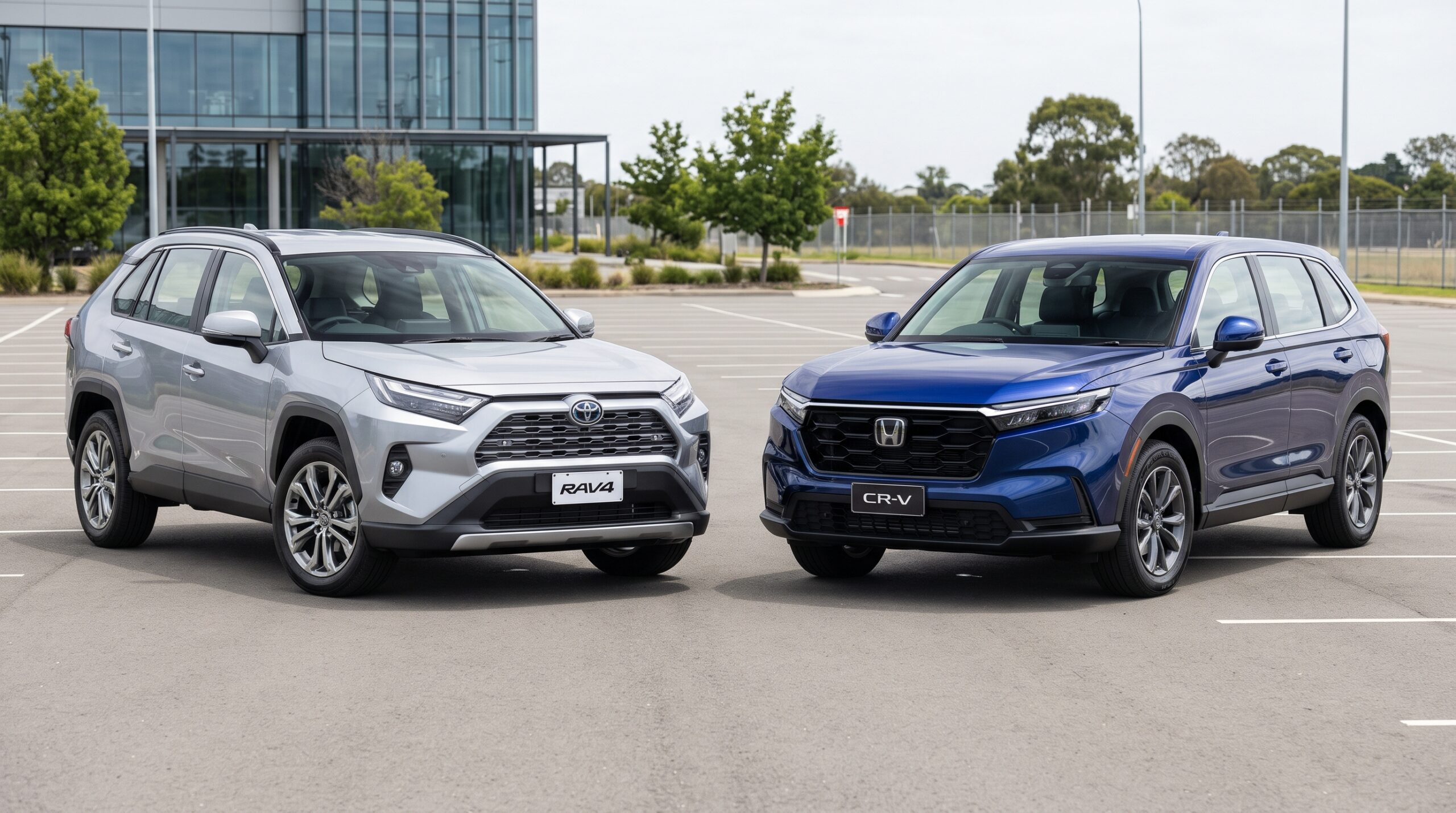
You need a practical compact SUV that will hold value, sip fuel, and avoid constant trips to the shop. The 2026 Toyota RAV4 and Honda CR-V sit at the top of most shopping lists for exactly those reasons. Both have strong reputations, yet the latest generation of each takes a different approach. One went fully hybrid. The other still gives you a choice. Here is how they compare where it actually matters for daily ownership.
Powertrains and Driving Character
The 2026 RAV4 arrives as a hybrid-only lineup (with a separate plug-in hybrid option). The standard hybrid pairs a 2.5-liter four-cylinder with electric motors for 226 horsepower in front-wheel-drive form and 236 horsepower with all-wheel drive. The CR-V continues to offer a 190-horsepower 1.5-liter turbo gas engine and a 204-horsepower hybrid system. The RAV4 feels stronger in most situations and delivers its power with typical Toyota hybrid smoothness, though the engine can sound busier under hard acceleration. The CR-V Hybrid is refined and quiet, with a more polished low-speed feel that many drivers prefer in city traffic.
Fuel Economy and Real-World Costs
This is one of the clearest differences. The RAV4 Hybrid posts higher EPA figures—reaching the low-to-mid 40s combined in efficient configurations—while the CR-V Hybrid lands closer to the high 30s to around 40 mpg combined depending on drivetrain. Over 12,000 to 15,000 miles a year the gap adds up in both fuel savings and fewer fill-ups. If you want the absolute lowest running costs and do not need a pure gas option, the RAV4 has the advantage. The CR-V still lets budget-minded buyers start with the less expensive turbo gas model if hybrid pricing feels steep.
Space, Practicality, and Towing
Both seat five adults comfortably and offer competitive cargo room behind the rear seats. The CR-V often edges ahead in maximum cargo volume with the seats folded and presents a wide, low load floor that is easy to use. The RAV4 counters with a notably higher towing capacity—up to 3,500 pounds on most hybrid trims versus roughly 1,000 pounds for the CR-V Hybrid. If you occasionally pull a small trailer or carry heavier outdoor gear, that difference is meaningful. For pure people-and-grocery duty the two are closely matched.
Ride, Handling, and Daily Comfort
Honda has long been praised for a composed, quiet ride in the CR-V, and that character continues. The RAV4 feels more planted and capable on rougher roads or light trails, especially in outdoor-oriented trims, yet some drivers find the road noise and firmness a bit higher. Seating positions in both are upright and easy to enter. Visibility is good in either vehicle. Your preference will likely come down to whether you prioritize Honda’s refinement or Toyota’s more robust, adventure-ready stance.
Reliability, Resale, and Ownership Confidence
Both brands score well in long-term reliability surveys and enjoy strong resale values that protect your wallet at trade-in time. Toyota’s hybrid system has a long track record and comes with extended battery coverage that many buyers find reassuring. Honda’s hybrid experience is also solid, and the availability of a conventional gas powertrain gives some owners peace of mind. Maintenance costs for both tend to stay reasonable when you follow the scheduled service. Hypothetical illustration: a driver keeping the vehicle eight to ten years will likely see either nameplate hold value better than most competitors, with only small differences between the two depending on mileage, condition, and local market demand.
Pricing, Features, and Which Buyer Fits Each

The RAV4 Hybrid often starts at a lower entry price than the CR-V Hybrid, and every RAV4 now includes hybrid efficiency. The CR-V can undercut on price if you choose the gas engine, then step up to hybrid when the budget allows. Feature content is competitive across comparable trims—safety systems, available larger screens, and modern connectivity appear on both. Choose the RAV4 if maximum efficiency, stronger performance, higher towing, and a hybrid-only strategy matter most. Choose the CR-V if you want a quieter daily ride, slightly more flexible cargo in some configurations, or the option of a lower-priced gas model.
The 2026 Toyota RAV4 and Honda CR-V remain two of the smartest compact SUVs you can buy. The RAV4 leads in fuel economy, power, and towing while committing fully to hybrid technology. The CR-V answers with refinement, cargo practicality, and powertrain flexibility. Drive both back-to-back on your usual roads, compare out-the-door prices on the trims you actually want, and weigh how many miles you drive each year. The smarter buy is the one that matches your priorities rather than the one that wins a spec-sheet contest. Schedule those test drives and let the real-world feel decide.
FAQ
Which gets better fuel economy in 2026?
The Toyota RAV4 Hybrid generally posts higher EPA ratings than the Honda CR-V Hybrid, especially in front-wheel-drive form.
Is the 2026 RAV4 still available with a regular gas engine?
No. The redesigned RAV4 is hybrid-only, with a separate plug-in hybrid version also offered.
Which one tows more?
The RAV4 Hybrid can tow up to 3,500 pounds on most trims; the CR-V Hybrid is limited to about 1,000 pounds.
Which has more cargo space?
The CR-V often holds a slight edge in maximum cargo volume with the rear seats folded, though both are competitive for the class.
Which holds value better?
Both Toyota and Honda compact SUVs have strong resale track records; differences are usually small and depend on condition, mileage, and local demand.
Leave a Reply